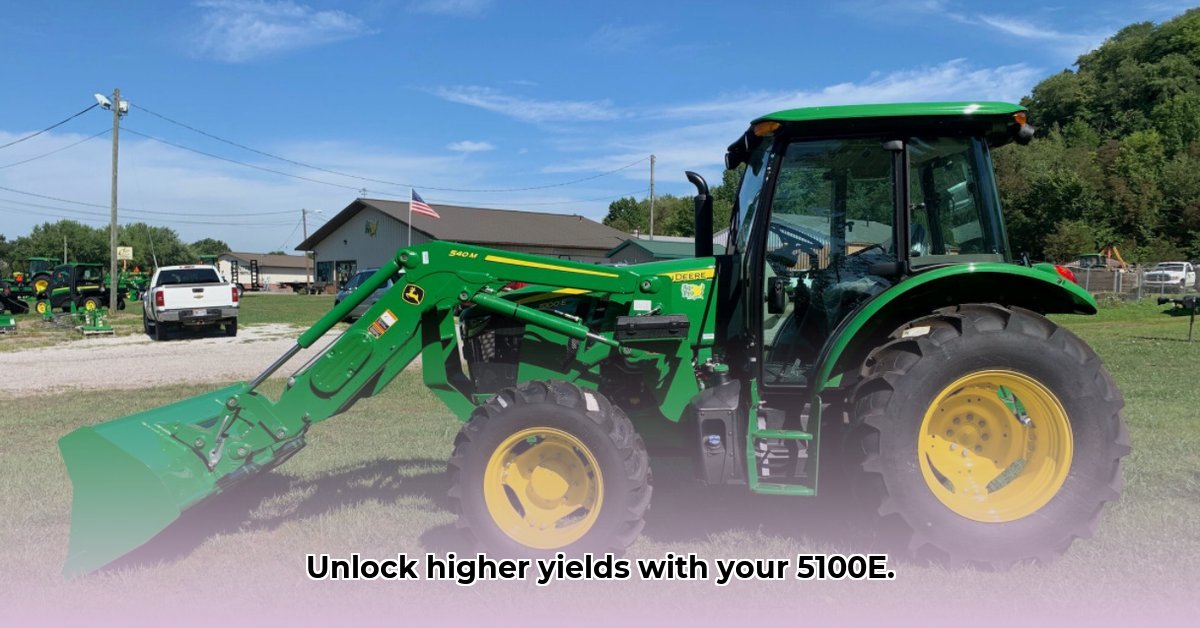
John Deere 5100E: A Deep Dive into Sustainable Farming Practices
The John Deere 5100E tractor represents a significant advancement in sustainable agricultural practices. This comprehensive guide explores its key features, precision agriculture integration, market analysis, and actionable recommendations for optimizing its use. We'll examine how this tractor can contribute to both increased yields and environmental responsibility. For more on John Deere's commitment to sustainability, check out their electric tractor initiative.
Powerful Performance, Optimized Efficiency
The 5100E boasts impressive capabilities, including a lifting capacity of up to 4600 pounds, ensuring efficient handling of diverse farm tasks. Many models incorporate Mechanical Front Wheel Drive (MFWD), significantly enhancing traction on uneven terrain. This improved traction translates to reduced fuel consumption and less time spent on slippage – a considerable benefit for both productivity and sustainability. Furthermore, premium cab options prioritize operator comfort, minimizing fatigue and maximizing efficiency throughout long working days. Isn't reduced operator fatigue directly reflected in fewer errors and a more consistent output?
Precision Agriculture Integration: JDLink™ and Beyond
The 5100E's integration with JDLink™ elevates it beyond a traditional tractor. This telematics system provides real-time data on tractor performance, enabling proactive maintenance and optimized resource allocation. For example, precise fertilizer application based on soil analysis, facilitated by JDLink™, minimizes waste and reduces the environmental impact of excess chemical use. How significant is the potential cost reduction from preventing over-application of fertilizers alone?
JDLink™ also allows for real-time tracking of equipment, improving fleet management and security. However, even with its advantages, there are limitations. Connectivity issues, particularly in remote areas, can significantly impact the system's effectiveness. Data security is another critical factor, requiring robust measures to protect sensitive farming information.
Market Analysis: Price, Demand, and ROI
The 5100E's price varies significantly — typically ranging from $35,000 to $75,000, influenced by factors such as age, hours of operation, and included features. While the initial investment is considerable, the potential long-term return on investment (ROI) is compelling. For large farms, increased efficiency, fuel savings, and precise resource management often justify the expense. Smaller farms, however, should carefully consider their needs and explore financing options to determine its suitability.
Case Studies: Real-World Success in Sustainable Farming
(Note: This section would ideally include brief case studies showcasing successful implementation of the 5100E in various farming operations. These examples should highlight the practical benefits, such as yield increases, cost reductions, and environmental improvements.)
Overcoming Challenges: Cost, Training, and Security
Widespread adoption of the 5100E faces several challenges. The high purchase price can be a major barrier for smaller farms. Adequate operator training is crucial for effective utilization of JDLink™ and its data analysis capabilities. Moreover, robust data security measures are vital to protect sensitive farming data from cyber threats. Addressing these challenges requires a collaborative effort between farmers, John Deere, and government agencies.
Actionable Recommendations for Stakeholders
Achieving optimal results with the 5100E necessitates a coordinated approach from all stakeholders.
1. Farmers: Prioritize training on JDLink™ features, focusing initially on areas of greatest impact (e.g., fuel monitoring). Explore available financing options and thoroughly assess the long-term ROI for your operation.
2. John Deere: Continue to enhance JDLink™'s user interface and provide comprehensive training and support materials. Invest in robust data security measures and explore options for data portability.
3. Government Agencies: Consider subsidy programs to make precision agriculture technologies more accessible to small and mid-size farms. Support the development of industry standards for data security and interoperability.
Risk Assessment and Mitigation Strategies
A proactive approach to risk management is crucial.
| Risk Category | Specific Risk | Likelihood | Impact | Mitigation Strategy |
|---|---|---|---|---|
| Financial Risk | High initial investment cost | High | Moderate | Explore financing options; carefully analyze ROI. |
| Operational Risk | Inadequate operator training | Moderate | Moderate | Invest in comprehensive training programs; provide ongoing support. |
| Data Security Risk | Data breaches and cyberattacks | Moderate | High | Implement strong cybersecurity measures; utilize data encryption. |
| Technology Dependence | Reliance on JDLink™ functionality | Moderate | Moderate | Develop backup strategies and diversify technology solutions. |
Conclusion: The Future of Sustainable Farming
The John Deere 5100E, powered by JDLink™, offers a significant opportunity to enhance both farm productivity and environmental sustainability. Addressing the challenges and proactively managing risks will allow farmers to fully unlock the potential of this technology, contributing to a more efficient and responsible future for agriculture. The path to sustainable farming is paved with smart technology, and the 5100E is a key step on that journey.